Cambodia: The legacy of silence
More than forty years ago, the Khmer Rouge regime, led by Pol Pot, plunged Cambodia into one of the devastating genocides of the 20th century. Between 1975 and 1979, between 1.7 and 3 million people died in a radical attempt to create a classless agrarian society. Beyond the loss of lives, the regime destroyed much of the country's human capital by systematically persecuting intellectuals and professionals. Today, Cambodia continues to face the consequences of this historical rupture, which still conditions its educational, social, and economic development.
Irati Zozaya Araujo
5/5/202622 min read
1. Introduction: The Invisible Impact of Genocide
More than four decades ago, Pol Pot’s brutal regime in Cambodia came to an end, but the scars it left remain deeply present. The Khmer Rouge, a radical communist movement, subjected the country to one of the most devastating episodes of the 20th century between 1975 and 1979, resulting in the deaths of nearly a quarter of its population. In their attempt to impose a classless agrarian society, millions of Cambodians were expelled from cities, stripped of their belongings, and forced to work in extreme conditions in agricultural camps, prisons, and extermination centers, where many died from starvation, disease, exhaustion, or execution.
However, reducing the Cambodian genocide merely to its mortality figures would be simplifying its true scope. Beyond the physical destruction of a significant part of the population, the regime caused a profound rupture in the country's social and cultural structure. Intellectuals, professionals, and educated individuals were systematically persecuted and eliminated, considered enemies of the new order. This targeted violence did not just end lives; it dismantled the human and intellectual capital of an entire nation, interrupting the transmission of knowledge between generations.
Today, the Cambodian case remains relevant not only as a historical episode but as an example of how genocide can permanently affect a country's development. The consequences of that destruction are still visible in key sectors such as education, health, and justice, where the lack of qualified professionals has conditioned development opportunities for decades. This article argues that the genocide was not only a human tragedy but also a structural catastrophe: by eliminating a large portion of the educated population, the Khmer Rouge regime compromised access to knowledge and professional training for entire generations, the consequences of which continue to define Cambodia's present.
2.Historical Context and the Khmer Rouge Genocide
Cambodia Before 1975: A Society in Transition
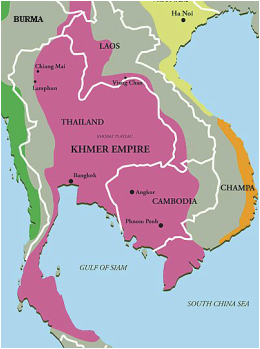
To understand how the country reached this situation, one must know its origins. Before becoming modern-day Cambodia, the region was the Khmer Empire, a great civilization that existed between the 9th and 15th centuries and encompassed territories that are now part of Cambodia, Thailand, Laos, and Vietnam. After the fall of that empire, the territory continued to be inhabited by the Khmer people but lost power and fell under the influence of neighbors like Siam (Thailand) and Vietnam. In the 19th century, it became a protectorate within French Indochina, until it gained independence in 1953 after nearly a century of French rule.
At that time, the country was governed by King Sihanouk, who abdicated in 1955 to begin a political career. His father took the throne, and Sihanouk became prime minister, and in 1960, head of state. His government promoted strong nationalism and loyalty to the State, but it was also perceived as corrupt and ineffective. Furthermore, economic inequality was stark: while the urban population enjoyed a certain level of wealth and comfort, the majority of Cambodians lived in rural areas working in agriculture. This social division made the country particularly vulnerable to revolution and led to the appearance of various clandestine groups aiming to overthrow the government. Initially, even right- and left-wing groups, including future Khmer Rouge leaders, acted as allies.
In 1970, Sihanouk was overthrown by General Lon Nol, who proclaimed the Khmer Republic and aligned himself with the United States in the context of the Vietnam War, in which the U.S. was fighting North Vietnam. The new government received American support and faced both North Vietnamese forces and the Cambodian communists, the Khmer Rouge, led by Pol Pot. From exile in China, Sihanouk eventually allied with the latter.
From that moment, the Cambodian Civil War erupted (1970–1975), a conflict that pitted the monarchy (and subsequently Lon Nol’s Republic), along with its allies, against the Cambodian communists of the Khmer Rouge, supported by North Vietnam and the Viet Cong. The war became progressively more violent and completely destabilized the country, until in 1975 the Khmer Rouge took Phnom Penh (Cambodia’s capital), defeated the government, and ended the civil war, initiating their regime.
One of the key factors that facilitated the fall of the cities was the intense American bombing of Cambodia during the Vietnam War, part of the U.S. strategy to attack alleged Viet Cong routes in Cambodian territory. In this campaign, more bombs were dropped on Cambodia than all those used by the Allies in World War II, and many areas of the country, including nearby areas and even the capital itself, suffered frequent and prolonged attacks.
These bombings not only destroyed infrastructure and villages but also caused massive displacements of the rural population to the cities, especially Phnom Penh, which became saturated and entered a situation of social and economic collapse. The constant fear of air attacks, insecurity, and generalized chaos caused much of the population to lose confidence in the Lon Nol government, which was also viewed as dependent on and allied with the United States. This context fueled deep resentment towards the regime and foreign intervention, which the Khmer Rouge skillfully exploited, presenting themselves as a revolutionary force capable of restoring stability and ending corruption and inequality. In this sense, the indirect involvement of the United States in the conflict, through the bombings and its support for the Lon Nol government, contributed to weakening the Cambodian State and creating the conditions that facilitated the Khmer Rouge victory.
1975–1979: The Khmer Rouge Regime
Once the Khmer Rouge took power, they imposed a radical reorganization of Cambodian society, and the country was renamed Democratic Kampuchea. The period of genocide, between 1975 and 1979, was an explosion of mass violence in which an estimated 1.5 to 3 million people were murdered, representing nearly a quarter of the country’s population at the time. Many victims died from starvation, disease, and exhaustion due to harsh forced labor conditions, while thousands of others were directly executed.
The insurgents were guided by a Marxist-Leninist-inspired ideology, albeit taken to a radical extreme, and sought to transform Cambodia into a classless agrarian society. The movement was led by Pol Pot, known as “Brother Number One,” who had grown up in a peasant family in rural Cambodia in 1925 but was sent to study in France during his youth. There, in the 1950s, he came into contact with communist ideas and joined the communist party. Upon returning to Cambodia, he joined the clandestine communist movement and quickly rose through the ranks to become its main leader.
The genocide was the result of a social engineering project driven by the regime, which sought to create a classless agrarian society. Immediately after seizing power, the Khmer Rouge evacuated entire cities, and millions of people were forced to move to the countryside to work on collective farms in inhumane conditions. No one was exempt: the sick, elderly, children, and people with disabilities were forced to leave, and those who resisted or could not keep pace were executed.
The majority of the urban population was sent to forced agricultural labor, enduring extremely long days and scarce food, under the idea of building an “agrarian utopia.” However, poor economic management and the radical reorganization of the system caused a severe shortage of food and medicine, leading to the deaths of many people from hunger and disease. Furthermore, the regime confiscated all private belongings as part of the abolition of the former economy, aiming to completely eliminate the value of currency and create a new system. Although the Khmer Rouge even designed their own currency, it never circulated or was officially used.
The regime’s extreme interpretation of Maoist communism led them to try to eliminate social classes, leaving only the so-called “old people” (poor peasants considered ideologically pure). Therefore, the main victims were the middle class and intellectuals (doctors, monks, lawyers, journalists, artists, and students), as well as ethnic and religious minorities like the Vietnamese and Cham Muslims. In addition to private property and money, religion, formal education, and much of traditional culture, including music and radio, were also abolished, in an attempt to completely rebuild society from scratch.
The Khmer Rouge advocated that Cambodia should return to a supposed “golden age,” where the land was cultivated by peasants and the country was governed by and for the poorest. They rejected urban and educated inhabitants, whom they considered corrupted by Western capitalist ideas. This was directly linked to the previous Lon Nol regime, which had received U.S. support during the Vietnam War but was also heavily criticized for corruption, political instability, and severe social inequalities—factors that fueled the discontent the Khmer Rouge exploited.
The regime fiercely persecuted intellectuals and anyone considered educated or professionally trained. Doctors, professors, engineers, lawyers, and scientists were seen as a threat to the revolution, as the regime associated them with Western ideas and potential system opponents. For this reason, many were executed along with their families. Even external signs of education, such as speaking a foreign language, wearing glasses, or simply displaying a behavior considered “intellectual,” could be sufficient reason to be arrested or murdered. This is particularly contradictory, given that Pol Pot himself had studied in France, spoke French fluently, and wore glasses.
To enforce loyalty to the State, they severed ties with religion and family. All political and civil rights were eliminated, and formal education disappeared. People could not choose whom to marry, change their workplace, or even decide what clothes to wear: always black. From 1977, children over eight years old were separated from their parents and sent to labor camps, where they were taught that the Angkar (the “State” or ruling organization) was their “true” family. They were also forced to spy on and report the activities of their relatives and neighbors. Children were key to the revolution, as they could be molded, indoctrinated, and trained to obey, fight, and eliminate enemies of the regime. In fact, Pol Pot himself went to rural villages before taking the capital to recruit young people who would be loyal to him in his revolution.
Violence reached an almost industrial scale under the regime. One of the main centers of repression was the S-21 prison in Phnom Penh, which had previously been a school and was converted into a detention, torture, and interrogation center. There, thousands of men, women, and children were systematically imprisoned, photographed, and registered before being subjected to interrogations. Individuals deemed enemies of the Angkar were sent to these centers, where confessions were extracted through brutal physical and psychological torture.
It is estimated that around 20,000 people passed through S-21 prison, one of nearly 200 across the country, most accused of treason within the regime itself, including former party members, officials, and their families, as well as some foreigners. Prisoners were usually held for two to three months, during which they were repeatedly interrogated until they were forced to confess. These confessions included supposed lists of “traitors,” which led to further arrests and fueled a continuous cycle of terror and internal purges. Even though the Khmer Rouge themselves were aware that the vast majority of these confessions were false, their primary goal was to obtain them to justify new detentions. Once a confession was obtained, prisoners were transferred to the so-called “killing fields,” where they were executed.
Furthermore, the regime enforced a policy of family extermination: if a person was designated an enemy, their entire family was often murdered as well to prevent any possibility of future revenge. This system of repression turned violence into an organized and systematic structure, essential for maintaining absolute control of the country.
After almost four years of genocide, the Cambodian capital was liberated by Vietnamese troops on January 7, 1979. This marked the end of Pol Pot’s government in the city and the beginning of a new State supported by Vietnam. Some Khmer Rouge members defected from the regime and, with Vietnam’s support, formed a new government. Meanwhile, the Khmer Rouge retreated to western rural areas and continued fighting as a guerrilla force in a second civil war that lasted until the late 1990s. While Vietnam and the USSR backed the new government, China and Western countries supported the Khmer Rouge, and thanks to this crucial international aid, they managed to regroup and remain a threat to the new rulers.
At the end of the Cold War, in the 1980s, the new power in Cambodia was dominated by Vietnam, an ally of the Soviet Union. The Atlantic alliance, as well as post-Mao China, in opposition to the Soviet-Vietnamese alliance, continued to recognize Pol Pot and his criminal gang as the legitimate government of Cambodia and the holders of the country's seat at the United Nations. They demanded the withdrawal of Vietnamese troops stationed in the country, which could have paved the way for the Khmer Rouge's return to power. Those who had murdered a quarter of Cambodia's population, after losing power and territorial control, were granted the privilege of representing Cambodia at the UN. This situation lasted for eleven years after their expulsion from Phnom Penh.
Survivors of the genocide found a devastated country. Buddhist temples had been destroyed, cities looted and abandoned, and many people had to face the uncertainty of not knowing if their relatives were still alive. Between 1979 and 1980, a severe famine affected the country. Furthermore, much of the educated and skilled population needed to rebuild Cambodia had either died or fled abroad.
Many refugees escaped towards the border between Cambodia and Thailand. In 1979, the international response allowed for the creation of several refugee camps in Thailand, which hosted about 160,000 people, although they were also persecuted there. Between 1978 and 1993, numerous Cambodian refugees were resettled in countries such as the United States, Australia, France, Canada, and others.
3.The Legacy of Genocide: A Generational Void
Break in the Transmission of Knowledge
Four decades later, Cambodia, a nation of approximately 16 million inhabitants, continues to grapple with its past. The Khmer Rouge genocide caused a profound break in the transmission of knowledge, as its primary target was precisely the educated sectors of the population. The majority of doctors, professors, engineers, lawyers, and other professionals were murdered or forced into exile, as they were considered an ideological threat to the regime. As a result, the country lost virtually an entire generation of trained individuals. After the regime's fall in 1979, it is estimated that only seven lawyers and forty-three doctors survived in the entire country, reflecting the magnitude of the destruction of the educational and professional system.
Although some exiles began to return starting in the 1980s to contribute to the country's reconstruction, the number of qualified professionals remained extremely limited in all sectors. This shortage severely affected key areas such as health, education, and the judicial system, and still has visible consequences on the country's development today. The lack of trained doctors, teachers, and experts has made Cambodia largely dependent on international cooperation and non-governmental organizations. Therefore, it is common for many schools, especially in large cities, to rely on foreign teachers or international aid programs to fill the gap in trained personnel. In the health sector, the presence of medical NGOs covering basic needs in rural areas is also frequent.
The social impact of the genocide was also enormous in demographic and cultural terms: in 1979, it is estimated that around 200,000 children were orphaned, which further complicated the transmission of knowledge between generations. Although Buddhism, which had been almost eliminated under the regime, managed to recover and today almost the entire population identifies as Buddhist, the country's educational fabric took decades to rebuild, as it had to be done virtually from scratch. Very few trained teachers remained available in the country, most of the infrastructure had been destroyed or transformed into prisons, and books had been burned.
Regarding the teaching of the genocide itself, this topic is currently taught in Cambodian schools. For many years, it was a little-discussed topic in the official curriculum, partly due to subsequent political instability, but since the creation of memory and documentation institutions, such as the Documentation Center of Cambodia, its inclusion in school programs has been promoted. Even so, it remains a delicate subject and is not always taught with the same depth across the country.
Today, this legacy remains very present in both daily life and culture. Contemporary art, popular music, and even cinema have incorporated the memory of the genocide as a central theme, with examples such as films and documentaries produced in Cambodia or by the diaspora that address the country's reconstruction and collective trauma. At the same time, the Cambodian community abroad (especially in the United States and France) has played a key role in keeping this memory alive, creating a constant connection between the country's traumatic past and its globalized present.
As the Documentation Center of Cambodia points out, in statements gathered by Open Democracy, “genocide has become the identity of Cambodia,” as virtually the entire population is affected directly or indirectly: “Everyone in this country has been affected by the genocide. There is no way to escape it. Every child in this country is born of victims or perpetrators of the genocide.”
4.Cambodia Today: Reconstruction and Challenges
Reconstruction Processes and Progress
After nearly two decades of impunity, in 1997, the Cambodian government formally requested UN assistance to create a tribunal to judge the senior Khmer Rouge leaders responsible for the genocide. Although some leaders were judged in absentia after the regime’s fall in 1979, they were never effectively punished. In response, the Cambodian Parliament approved a law to establish a special tribunal, known as the Extraordinary Chambers in the Courts of Cambodia (ECCC), which sought to prosecute the main perpetrators of the regime. After years of negotiations between the government and the United Nations, this hybrid tribunal (with Cambodian and international judges) officially began operating in 2006.
The trials were held on Cambodian territory, with international participation, both to strengthen the country's judicial system and because of the severity of the crimes committed. However, the number of accused individuals was very small: in total, only nine people were indicted in four cases. Of these, only three former Khmer Rouge leaders were ultimately sentenced to life imprisonment. Among them is Kaing Guek Eav, known as Duch, responsible for the S-21 prison, who was arrested in 1999 after years of hiding in neighboring countries. In 2007, he was accused of crimes against humanity; his trial began in 2009, and in 2010 he was initially sentenced to 35 years in prison, a sentence that was raised to life imprisonment in 2012 after an appeal.
In 2011, other senior regime leaders were prosecuted, such as Nuon Chea, Ieng Sary, Ieng Thirith, and Khieu Samphan. However, several of them died before their trials concluded or were declared unfit to stand trial for health reasons. The most significant moment came in November 2018, when the court issued a historic ruling, convicting Nuon Chea (considered “Brother Number 2” after Pol Pot) and Khieu Samphan, the regime's Head of State, of genocide. Both were sentenced to life imprisonment for genocide, crimes against humanity, and grave breaches of international law. Nuon Chea died the following year, in 2019.
Pol Pot, on the other hand, managed to avoid capture and maintained some influence for nearly two decades. In 1992, when the UN Transitional Authority arrived in Cambodia, it considered him a necessary actor for achieving peace, although one of its goals was to prosecute him. However, he died in 1998 before being brought to trial. Although he was judged in absence, he was never punished for his crimes, and since he denied his crimes, he never showed remorse. In fact, he told the BBC that the S-21 prison was a Vietnamese propaganda plot.
Despite the other advances, the process was marked by slowness and controversy. From the outset, tensions existed between the Cambodian authorities and the international community, with mutual accusations of political interference. On one hand, Cambodia was distrustful of the UN because of its role during the Cold War; on the other, the international community questioned the independence of the Cambodian government, partly because some of its senior officials, including Hun Sen, had been part of the Khmer Rouge before defecting. This led to limiting the scope of the trials to a small group of leaders, leaving out many lower-ranking officials, some of whom received amnesties.
Consequently, the trials have been criticized both inside and outside Cambodia for their high economic cost and apparent ineffectiveness. Even so, the tribunal has had not only a judicial function but also a symbolic and documentary one: it has helped support and give a voice to the victims, preserve historical memory, and establish an official record of the regime’s crimes. Some processes are still ongoing, and the tribunal’s work remains a key piece in Cambodia's attempt to confront its past.
Adding to this complexity is the fact that the justice process has been particularly difficult from a moral and human standpoint. Beyond the principal leaders (who planned the regime, made conscious decisions, and directed the machinery of terror), there were thousands of cases where the lines between victim and executioner blurred. Many of those who participated directly in the repression, such as guards or interrogators in prisons like S-21, were actually young people recruited as children in rural areas, educated under the belief that the Angkar was their only family and that obedience was a matter of survival. Some had been separated from their parents, indoctrinated from a very young age, and forced to participate in acts of violence without fully understanding their meaning.
In this context, a fundamental question arises: how do you judge someone who was both a victim and a perpetrator? Many acted under constant threat, knowing that disobedience meant their own death or that of their relatives. There were people forced to torture so they would not be tortured themselves, or children used as informants in exchange for food in a system where refusing was equivalent to starving to death. This reality raises enormous ethical and legal dilemmas, as not all perpetrators acted with the same degree of freedom or conscience. For this reason, the courts chose to focus on the highest leaders of the regime, implicitly recognizing that for many others involved, it is not possible to apply traditional justice without ignoring the extreme circumstances in which they acted.
Despite these efforts, many consider that justice has been, to a large extent, incomplete. Only a minimal fraction of those responsible has been judged, and even fewer have been convicted, leaving the majority of perpetrators outside any judicial process. For many victims and survivors, the tribunal has had a primarily symbolic value: it recognized the crimes and gave some visibility to the suffering experienced, but it is far from representing full justice. Ultimately, no trial can bring back to life those who were murdered or repair the damage caused to those who survived with lifelong physical and psychological trauma.
Current Reality: Resilience and Inequality
The Cambodian genocide continues to have a profound impact on Cambodia today. Although the country adopted a new constitution in 1993 (amended in 2025), within the framework of the UN operation (UNTAC), and formally transitioned towards a democratic system, in practice it still faces significant difficulties in fully addressing the crimes of its past. One of the main obstacles was that the Khmer Rouge remained militarily active for years after the fall of their regime, which complicated any immediate attempt at justice. In fact, Prime Minister Hun Sen (who came to power in 1979 with Vietnam’s support and has been the dominant figure in Cambodian politics for decades) granted amnesties to numerous members of the regime with the goal of ending the conflict. Thus, peace often came at the expense of justice, reflecting the classic dilemma of post-war periods.
This legacy has also been deeply politicized. As journalist Sebastian Strangio, author of Hun Sen’s Cambodia, points out, since 1979 the memory of the genocide has been used in political discourse. Many former Khmer Rouge members have continued to occupy positions of power or influence, further hindering a complete reconciliation process. Hun Sen, leader of the Cambodian People's Party, has been one of the world's longest-serving leaders, and under his mandate, Cambodian democracy has been frequently questioned due to its lack of real openness and pluralism. In this context, any attempt at political change is often presented as a risk of returning to the chaos and violence of the past, which has fostered a politically cautious and risk-averse society.
On a social and cultural level, the country has also experienced a kind of return to the traditional. After the fall of the regime, many people sought stability in familiar elements like Buddhism, which is central to daily life again today, and in conservative values. This process has helped rebuild the social fabric but has also influenced a political culture marked by the fear of instability.
The memory of the genocide is very present in the public space, especially through places converted into sites of memory and tourism. The former S-21 detention center is now the Tuol Sleng Genocide Museum, which preserves much of the facilities as they were found in 1979 by Vietnamese troops. Thousands of photographs of prisoners are displayed inside, as well as instruments of torture, offering a direct testimony of the crimes committed. Of the approximately 20,000 people who passed through this prison, only seven survived, and some of them have dedicated their lives to recounting their story to visitors. In fact, several of them continue to visit the museum almost daily to sell their autobiographies.
Furthermore, for those who cannot visit these places in person, there are also digital resources that allow access to this historical memory. The Tuol Sleng Genocide Museum offers a permanent online exhibition where it is possible to view photographs of the victims, objects used during torture, and testimonies that document what happened. This digital platform facilitates global access to the history of the genocide and contributes to the preservation of memory, allowing people worldwide to inform themselves and reflect on these events even without traveling to Cambodia.
Likewise, the so-called Choeung Ek Killing Fields have become another important site of memory, where marked mass graves remember the executed victims. However, the management of these spaces poses a constant dilemma between the need to preserve historical memory and the victims' need for respect versus their exploitation as tourist destinations.
Overall, Cambodia remains a country marked by its recent past. Although it has advanced in terms of stability and development, the wounds of the genocide, the lack of complete justice, and the continuity of certain power structures make its recovery process complex and still unfinished.
Testimonies and Local Voices
The testimonies of victims and survivors are fundamental to understanding the magnitude of the Cambodian genocide beyond the numbers. Through their accounts, it is possible to approach the human experience of what happened, marked by loss, trauma, and, in many cases, a constant search for meaning.
One of the most striking examples is that of filmmaker and writer Rithy Panh, who lived through the genocide as a young child. Like millions of Cambodians, he was expelled from Phnom Penh with his family and sent to work in the countryside under extreme conditions. During those years, he lost almost all his loved ones: his parents, several siblings, nephews, and in-laws were murdered or died due to the conditions imposed by the regime. After the entry of Vietnamese troops, he managed to survive by passing through refugee camps in Thailand, where he was even further persecuted, until he could finally benefit from a family reunification program in France, where one of his brothers resided, one of the few who had survived the exile.
Once in France, he rebuilt his life and received an education, but never stopped confronting the memory of what he had lived through. Years later, he decided to return to that memory to try to understand it. To do this, he undertook an extraordinary process: he interviewed former regime officials for months, including Duch, head of the S-21 prison, as well as torturers and executioners from both S-21 and extermination camps like Choeung Ek. The result of this work was the book The Elimination , in which he alternates his own story as a victim with his conversations with those who participated directly in the genocide. The value of this work lies precisely in its approach: it does not seek to justify, but neither does it limit itself to condemning; rather, it tries to understand how specific individuals could become the executioners of such extreme violence, even when that same violence destroyed their own families.
Rithy Panh also explored these stories through cinema. In the film Bophana: A Cambodian Tragedy, he reconstructs the lives of Hout Bophana and her husband, Ly Sitha, using letters, forced confessions, and documents preserved by the regime. Sitha, a former Buddhist monk, had initially joined the Khmer Rouge motivated by discontent with the corruption of the Lon Nol regime, which had caused the couple’s separation. However, after the evacuation of Phnom Penh, they managed to reunite, only to be trapped in the regime’s internal purges. Both were arrested, transferred to S-21 prison, tortured, and forced to sign false confessions before being executed in 1977. Their story, which can also be known through the archives preserved at S-21, reflects how the system ultimately devoured even those who had believed in it at one point.
Another key testimony is that of Vann Nath, one of the few survivors of the S-21 prison. After the arrival of the Khmer Rouge in 1975, he was evacuated from his city with his family and forced to march on foot for days to a rural area, where he had to build his own dwelling and work in the rice fields under extreme conditions. He remained there until 1977, when he was arrested without explanation, as happened with many of the so-called “new citizens” (educated people or those from the cities). He was transferred to various detention centers where he suffered interrogations and tortures (including electric shocks) and where conditions were extremely precarious, with barely any food and constant deaths among the detainees.
Finally, he was sent to S-21, where prisoners lived chained, crowded, and subjected to constant violence. Food rations were minimal, many died of hunger or disease, and others were taken away for execution. The sound of torture screams was daily. Vann Nath survived exceptionally because he was identified as a painter and selected to paint portraits of regime leaders, which gave him certain advantages, such as receiving slightly more food and not being permanently chained. Even so, he lived in constant fear of being executed at any moment. After the fall of the regime, he returned to the site and found evidence of the mass executions, including the mass graves at Choeung Ek.
After the war, Vann Nath dedicated his life to painting the scenes he had witnessed, turning his art into a form of testimony. His works vividly depict the tortures, the living conditions in the prison, and the systematic violence of the regime. Today, both his story and his paintings can be seen at the Tuol Sleng Genocide Museum, where they form an essential part of the genocide's visual memory.
These are just a few examples among thousands of testimonies. Numerous libraries, archives, and organizations are dedicated to collecting and preserving these stories so that they do not fall into oblivion. Initiatives such as those of the Transcultural Psychosocial Organization Cambodia collect survivor narratives and offer access to these resources, reminding us that behind every number are lives, families, and memories that continue to deeply mark Cambodia's present.
5.Conclusion: Memory, Continuity, and Future
Although, decades later, some of the direct perpetrators of the genocide have finally been judged, the feeling of justice remains profoundly incomplete. Because while the Khmer Rouge leaders have begun to be held accountable, what about the countries that, directly or indirectly, contributed to making all of this possible? None of them have been judged or faced real consequences, despite having played a key role in a process that ended the lives of almost a quarter of the Cambodian population.
The United States, for example, paved the way for the country's destabilization through massive bombings during the Vietnam War, prioritizing its fight against communism in the region over the consequences for the Cambodian civilian population. The genocide lasted four years. During that time, there were refugees, testimonies, and sufficient signals for the international community to have at least some awareness of what was happening. However, the response was practically non-existent. Very few spoke out, and even fewer acted. It took four years for Vietnam to intervene and end the regime. Meanwhile, powers like France (the former colonial metropole that had exploited the country's resources and population for decades) remained silent. It is particularly striking that Pol Pot was educated in France and that, even so, there has never been a clear self-criticism from the country.
But the contradiction does not end there. After the fall of the Khmer Rouge, far from being internationally isolated, they continued to receive support from powers such as the United States, China, and several Western countries, in the context of the Cold War. Although it is possible that the full magnitude of the genocide was not known at the time, there were enough indications to question that support. Nevertheless, geopolitical interests prevailed again. Even the UN maintained the Khmer Rouge representatives as the official delegation of Cambodia for years, despite evidence of the crimes committed. This alliance between the West and China delayed any real possibility of justice and allowed those responsible for the genocide to remain active until well into the 1990s. International aid did not completely cease until 1990, although the group then continued to finance itself through illegal trade and smuggling for several more years.
This entire network of complicities, silences, and lack of responsibility is difficult to ignore. Countries that never apologized or assumed their role in the events, but today speak of historical memory and the importance of not repeating mistakes. However, that reflection loses value when observing the present. Because, once again, the world is witnessing a genocide without effective intervention. The ethnic cleansing being carried out by Israel in the Gaza Strip, the forced displacement of the Palestinian population by Israeli settlers, and the systematic violence are facts known globally. This time there is no excuse of ignorance: the information is public, immediate, and constant. And yet, the international response remains limited. Cambodia is not only a story of the past but also an uncomfortable reminder of how inaction, political interests, and silence can allow tragedies of this magnitude to occur, and repeat themselves, before the eyes of the world.
Additional sources:
CNN. (2014). The Khmer Rouge. https://edition.cnn.com/interactive/2014/08/world/khmer-rouge/index.html
Documentation Center of Cambodia. (n.d.). Although two millions were killed, five millions more survived. https://www.dccam.org/although-two-millions-were-killed-five-millions-more-survived-to-tell-their-story-the-perpetrators-of-these-crimes-also-survived-as-well/
Extraordinary Chambers in the Courts of Cambodia. (n.d.). Legal framework: Constitution of the Kingdom of Cambodia. https://www.eccc.gov.kh/en/about/legal-framework
Holocaust Memorial Day Trust. (n.d.). Cambodia: The Extraordinary Chambers. https://hmd.org.uk/learn-about-the-holocaust-and-genocides/cambodia/the-extraordinary-chambers/
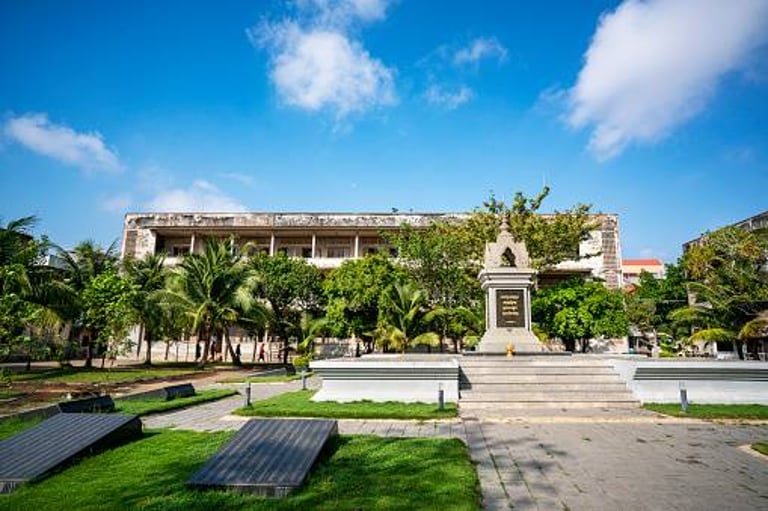
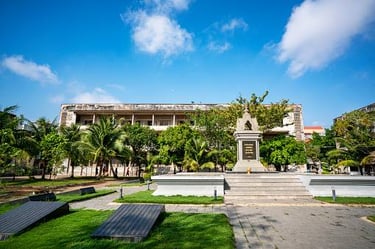
Caption: A school turned prison: the inner courtyard of the Tuol Sleng Genocide Museum in Phnom Penh. Formerly a secondary education institution (Tuol Svay Prey High School), this site was transformed in 1975 by the Khmer Rouge into a secret detention and torture center, known by the code name S-21. The memorial at the center now honors the memory of the thousands of victims who perished there.
Credit: Getty Images / Public Domain.
Caption: The Khmer Empire at its peak. Between the 9th and 15th centuries, this civilization dominated much of Southeast Asia, leaving an immense cultural and architectural legacy before the centuries of decline and colonization.
Credit: Public Domain / Historical Cartography.